If you grew up inside a faith and walked out of it on your own two feet, what you lose isn’t only God. It’s also the words.
You already know what I mean, even if you’ve never said it out loud. The pause before a meal where something used to go. The moment you wake in the dark with your heart going and reach for the old words and find the place they lived swept clean. The leaving gets the attention. The silence after doesn’t.
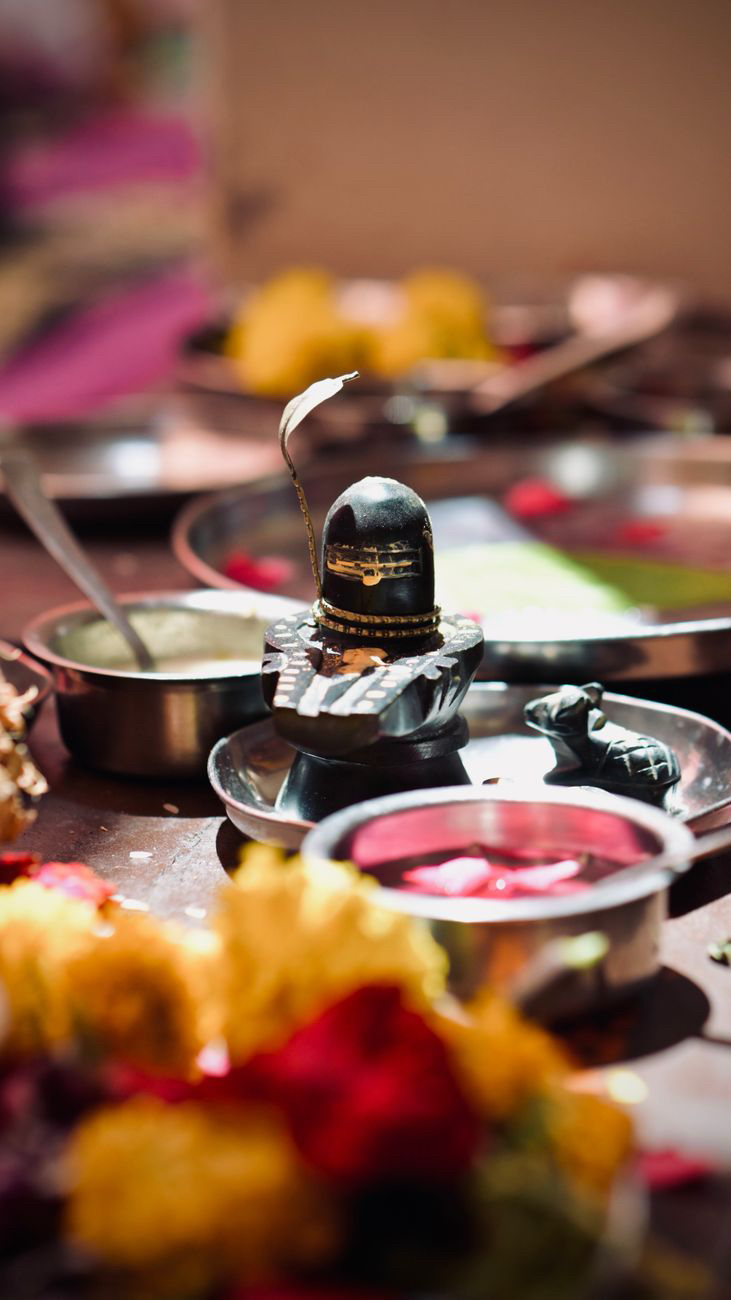
Before the food, there was the prayer. A few words offered upward before the first bite, handed down so early you couldn’t remember learning them. My mother said Satnam Sri Waheguru, true is the Name, wondrous the Lord. My father said Om Namah Shivaya, I bow to Shiva. Two different gods at the same meal, nobody thinking it worth a mention. No dining table. You ate on the bed, plastic sheet underneath to save the sheets, cricket on the TV because my father watched replays with the same intensity as the live match. At some point the words stopped and the meal just started. I didn’t notice when.
There is another kind of prayer, the one you reach for when you are not grateful but afraid. That one I learned later, in the dark.
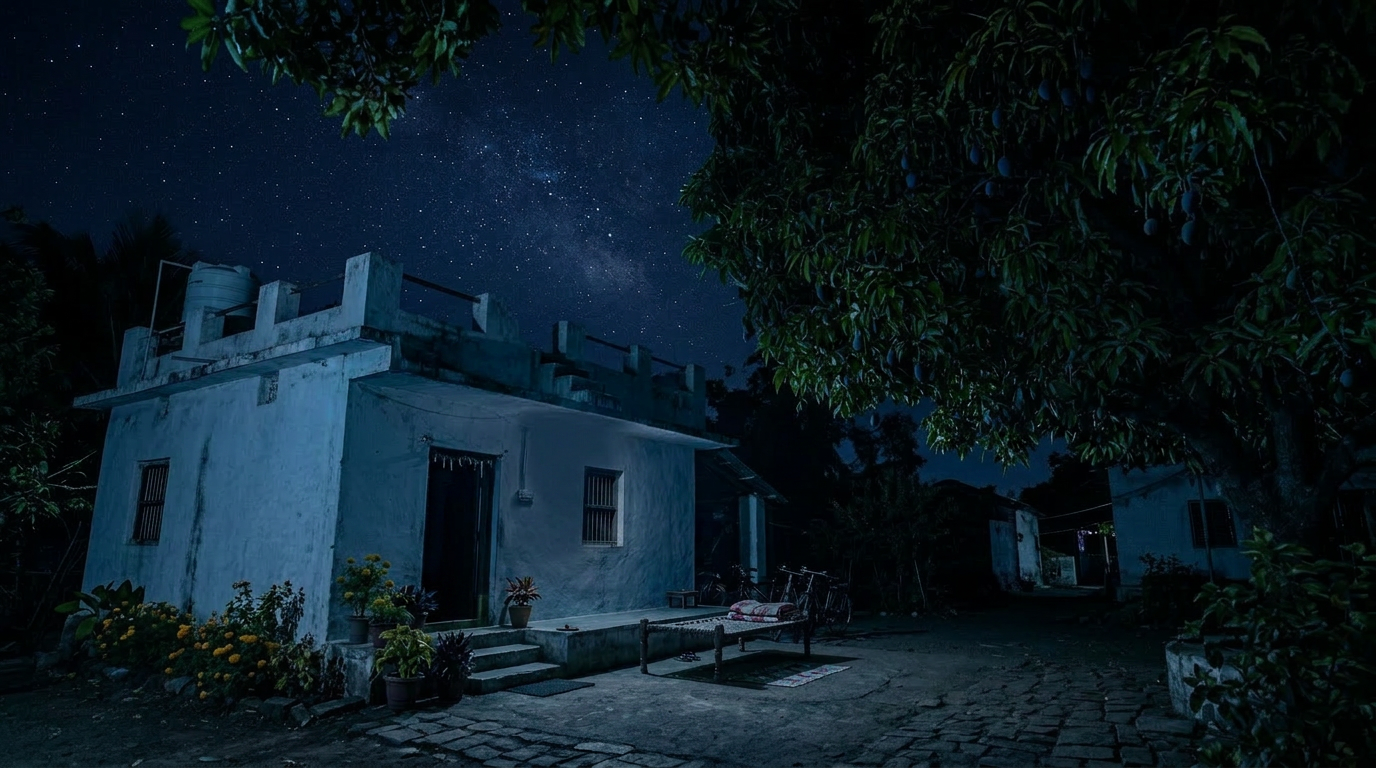
The dark I learned it in wasn’t a room. During the hottest summer months in India, the indoors became hotter than the outdoors, and the whole family slept outside in the front yard, under open sky. This wasn’t a choice. Nobody on our street had air conditioning. The houses were strung together like row homes, government built, so the side walls stood four feet, low enough to talk over, and the front wall rose to meet the gate so the road couldn’t see in. Walls for every direction a person might come from. None for the one that mattered.
Three houses down stood a mango tree so tall it overlooked the whole neighbourhood, and therefore, specifically, us. You couldn’t see it from the yard. You just knew it was there. My brother slept through all of it, a gift he did not share with me.
Where I come from, not every tree is only a tree. The old heavy ones are where the spirits live. A churail, the ghost with her feet turned the wrong way, favours exactly that kind.
Going inside felt like the answer, and it wasn’t. My room was an extension off the back of the house, built out into the backyard with a tin roof that soaked up the whole day’s heat and was still giving it back at midnight. We had our own mango trees back there, and all summer they dropped fruit onto that roof, right above where I slept. In daylight it was free fruit and nobody thought about it. After dark it was something landing on the roof over your head, in the middle of the night, with no warning.
Tin makes everything louder than it is. A mango hitting it went off like something breaking, close enough that I’d be awake before I understood what had woken me. Then I’d lie there waiting to see if another one came. It was the waiting that got me, more than the noise.
So the yard was too open and my own room had a roof that kept startling me awake. Neither was better. What I had instead was the prayer.
Against all of that you had Hanuman. The god of strength and loyalty, son of the wind, who comes the instant he is called. His prayer, the Hanuman Chalisa, chalisa meaning forty for its forty verses, carries a line every frightened child knows by heart:
Bhoot pishaach nikat nahin aave, Mahaveer jab naam sunaave
Ghosts and evil spirits do not come near when you speak the name of the mighty one. You don’t call the gentle god for the dark. You call the one the dark is afraid of.
So I did what you do. Sheet to the chin, never over the face. Forty verses, fast, under your breath. Lose your place and you went back to the top, because a half-finished Chalisa felt worse than none, a door you had meant to lock and left open.
Distraction dressed as devotion. Honestly? Quite effective. But to understand why, you have to know what ten-year-old fear feels like at two in the morning. The figure at the foot of the bed, still, waiting for you to look. The sound from the corner that wasn’t the house settling, too deliberate for that. The sense that something knew exactly where you were. The verses started and it lifted. Not gradually. The moment the words began, whatever was in the room left. It just left.
Everyone had something for the dark. A rosary, a grandmother’s thread, a stuffed animal whose exact position on the bed was non-negotiable. The prayer was never only belief. It was the sentence ready to go for the moment you had nothing else. Take the belief away and the sentence goes with it.
I don’t say it anymore. There was no single moment belief became past tense. It went quietly, the way things go when you’ve been holding them loosely for a while. But the moment I noticed the words were gone, that I can tell you exactly.
I was nineteen, alone for the first time, in a box room in Hounslow, close enough to Heathrow that the planes felt like they were landing on the roof. Lying flat on the bed I could watch the landing gear drop, the planes low enough to make out each wheel, one every few minutes, each one so loud it swallowed the TV whole. One night I rented The Ring from Blockbuster, walked back, and watched it alone. When the lights went off I reached, out of pure reflex, for the forty verses. And found I no longer believed a single word of them. The reaching and the finding nothing, that gap is the whole thing. It lasted about four seconds before I left the ceiling light on like a child, pulled a sleep mask over my eyes, and turned up my Walkman. The method had changed. The need was identical.
I thought that was the whole loss. What I didn’t expect was that the fear left with them too.
Gone. Not gradually. Just gone. These days I can watch anything and move on before the credits roll. It turns out the words and the fear were the same package. Lose one and the other goes too. Nobody warns you about that part. You just wake up one day and notice the dark is only the dark.
When the words ran out, what came to take their place? A song, a light, a habit you’d never admit out loud?
Ritika writes about leaving religion without leaving the culture it came wrapped in. Godless Ghar is updated when there’s something true to say.

Leave a Reply